Ready to release your domain to auction? Here's how it works — from listing to payout.
I. Listing a Domain Release Auction
1. Submit for Auction
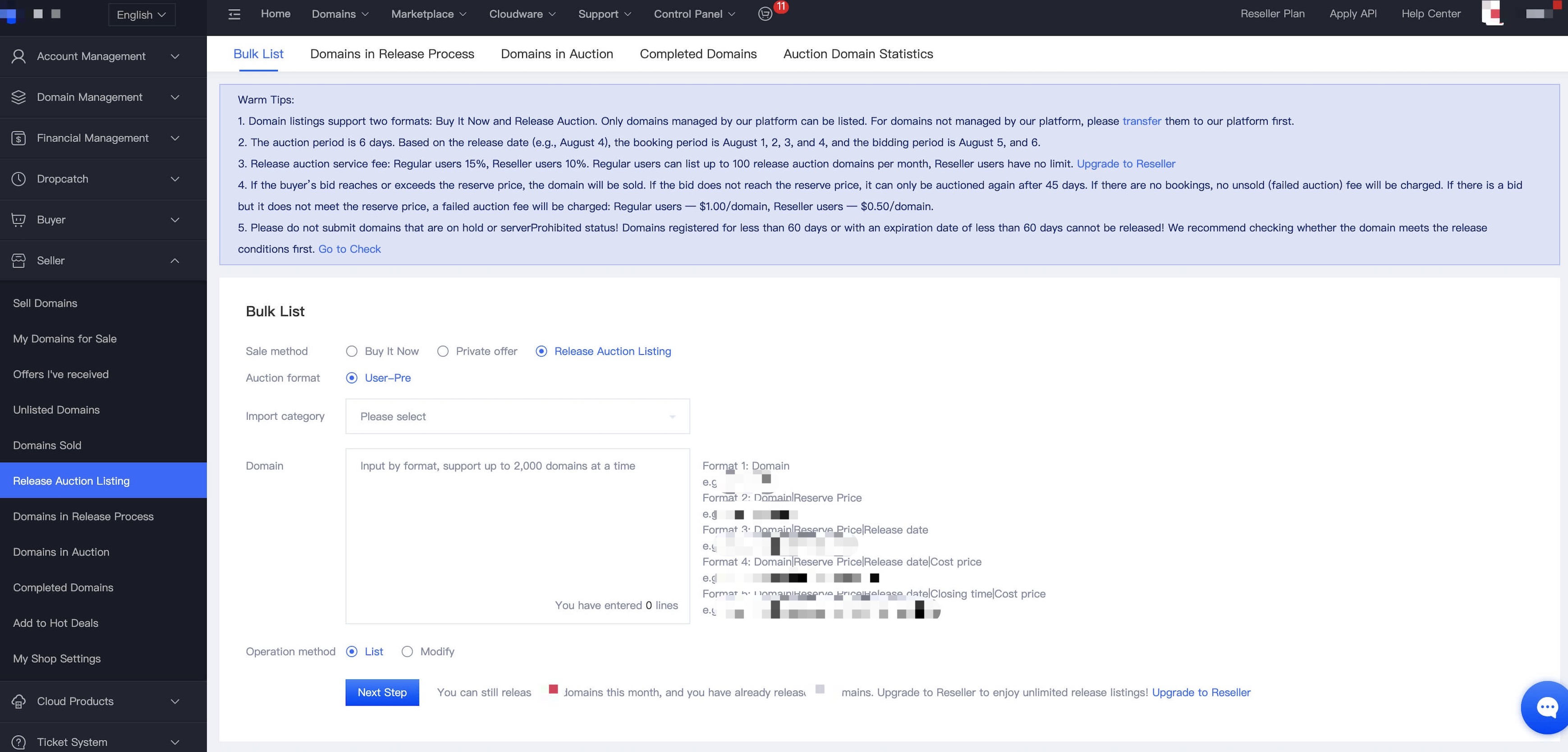
Go to [I'm a Seller] – [List for Release Auction] and submit your domain(s) according to the required format. If you need to submit in bulk, please follow the instructions on the submission page.
Releasing a domain for auction adds it to a public listing, allowing users on our platform to pre-order it before the sale.
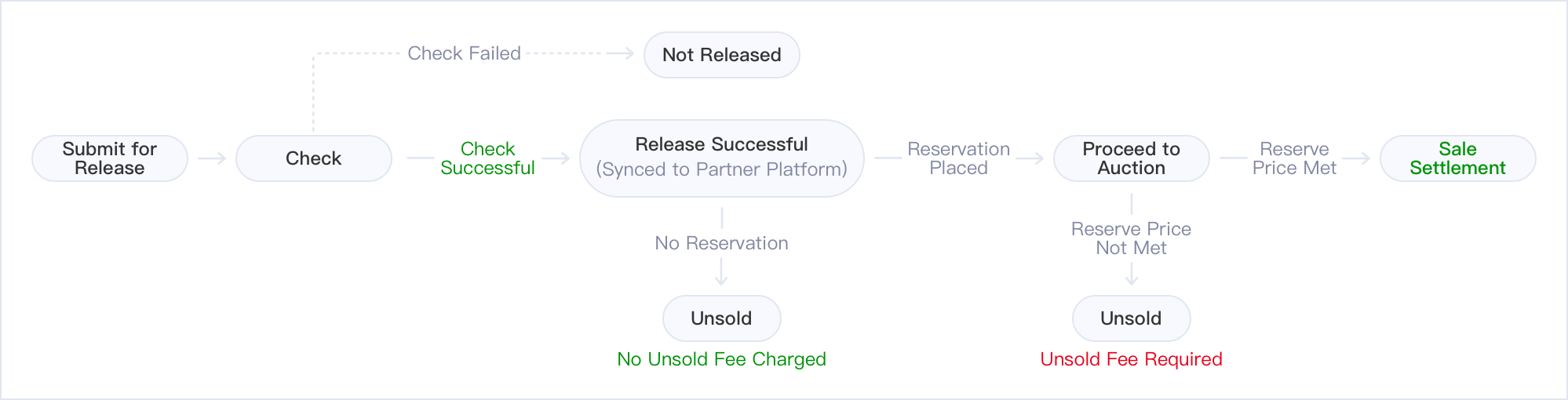
A. Once released, your domain(s) are open for pre-order for 4 days, followed by a 2-day bidding period.
B. Basic accounts can list up to 100 domains per month for auction. Resellers can last an unlimited number.
2. Create the Listing
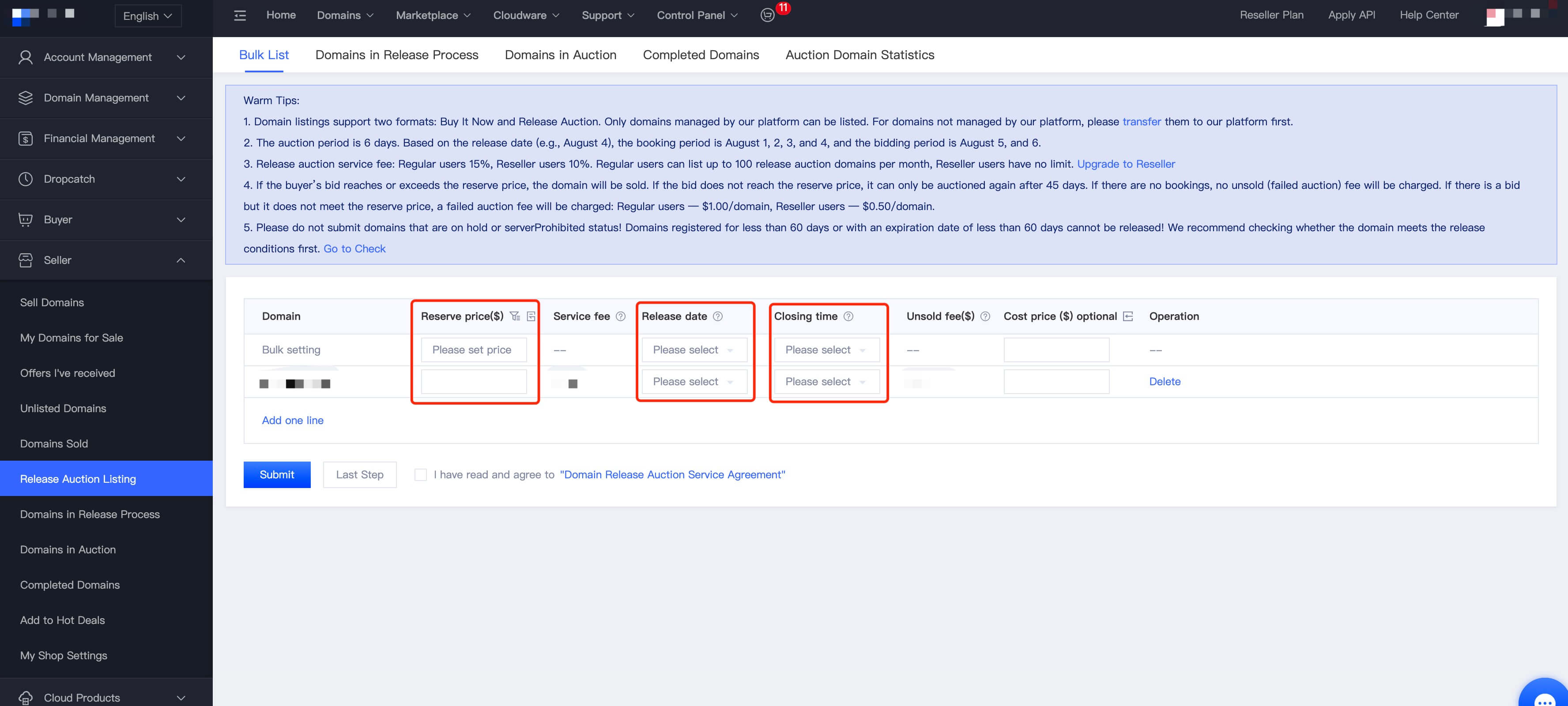
On the Release Auction page, set the following for each domain:
- Reserve price
- Release date
- Auction end time
- Cost (optional)
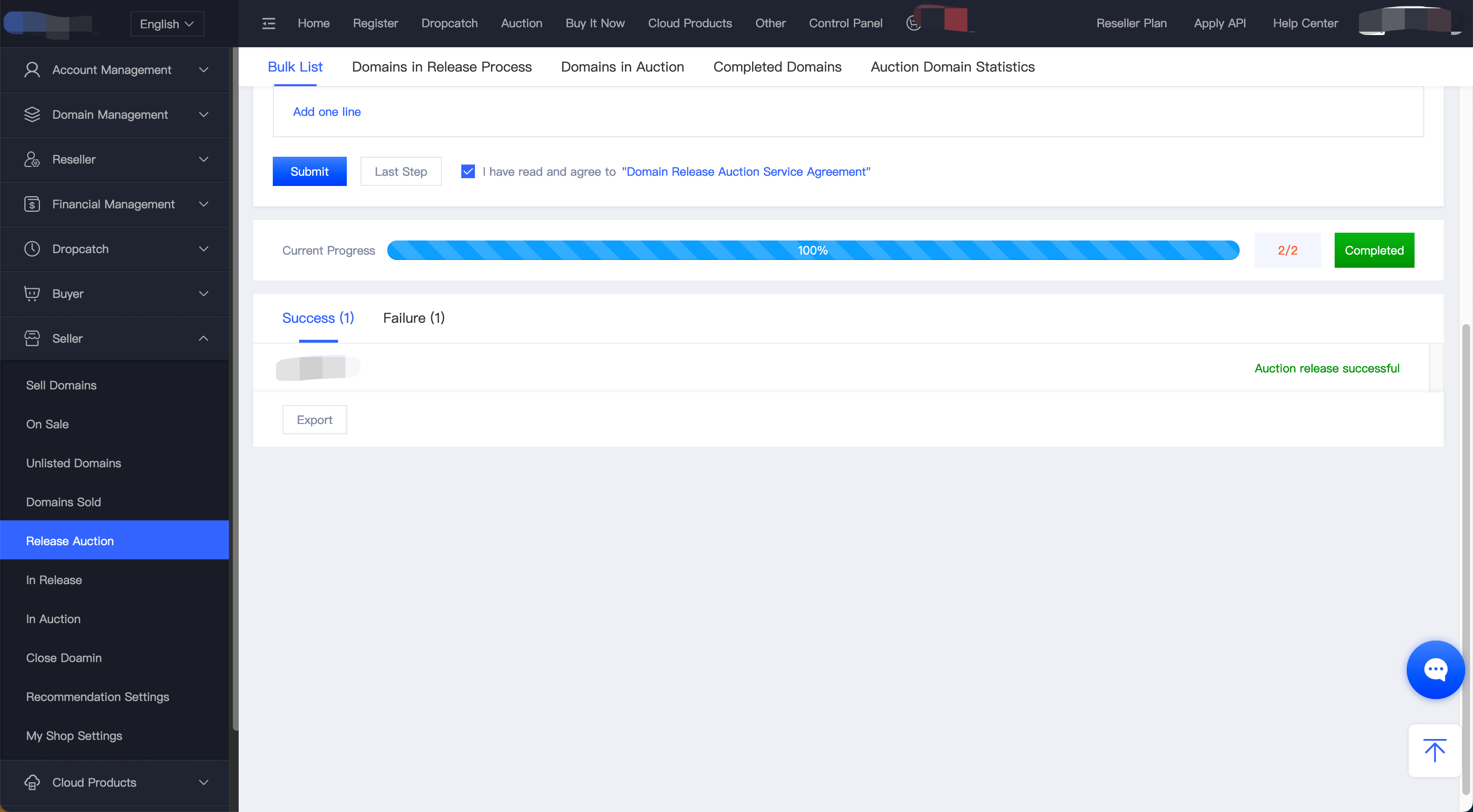
Review and accept the service agreement. Once your domains pass eligibility verification, the auction lot goes live right away.
3. Booking Period
The booking period is your pre-auction window. It lasts for 4 days. giving your domains to be marketed, viewed, and reserved for before bidding opens.
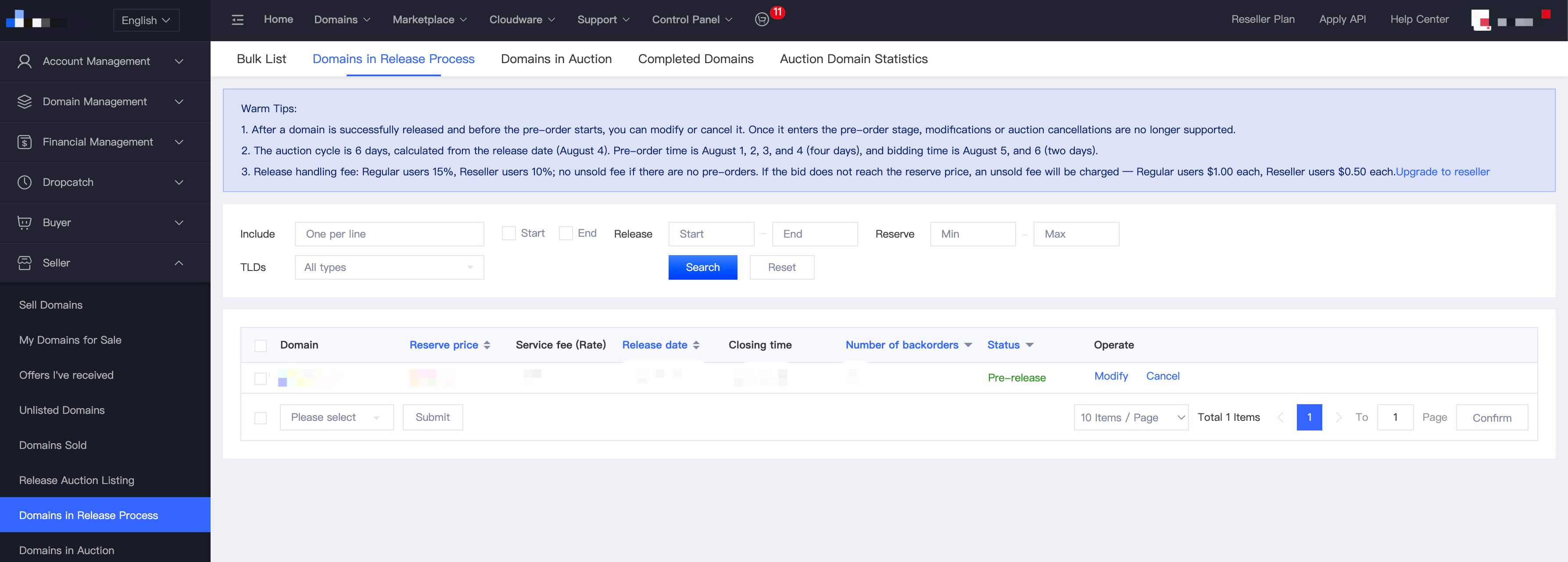
During this window, you can manage your listings In Release.
- Listings marked Pre-Release can be edited or removed.
- Listings marked as In Reservation are locked in and can't be changed.
If no one reserves the domain during its Release, it simply goes unsold. No fee, no cooldown.
4. Auction Phase
A. If a domain receives a reservation, it will enter the bidding phase after the release period. The bidding period lasts for 2 days.
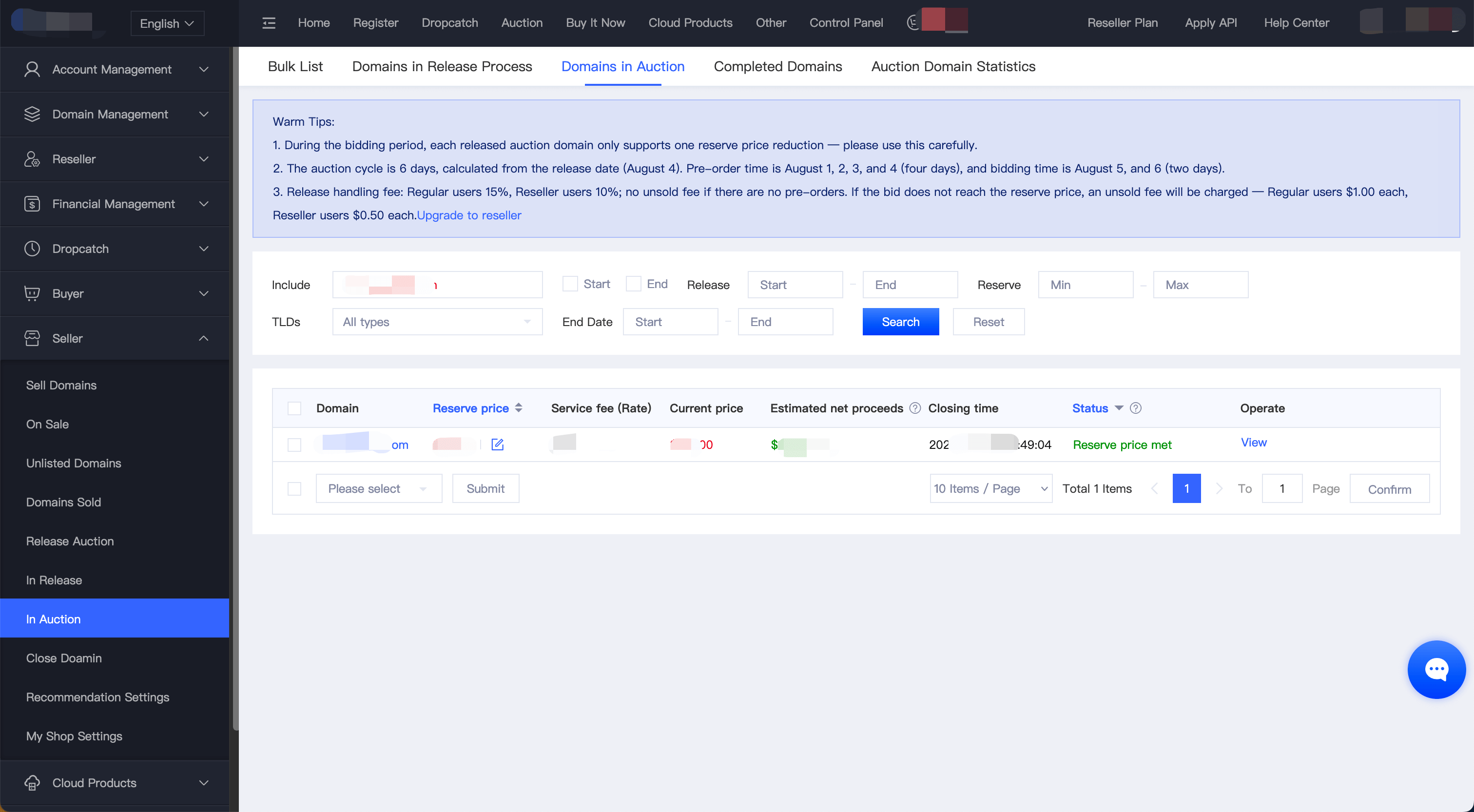
B. You can check the bidding status under [Domains in Auction], which shows: Above Reserve Price / Below Reserve Price. Click the domain or “View” to enter the auction detail page.
C. During the auction, sellers have one opportunity to lower the reserve price—but only if done more than 3 minutes before the auction ends.
Important Notes:
a. Entering the auction. Once a domain gets at least one reservation, it moves into a 2-day bidding period when the release period ends.
b. Tracking bids. Check bid status under Domains in Auction, shown as either Above Reserve Price or Below Reserve Price. Click the domain (or "View") for full auction details.
c. Lowering the reserve price. You get one chance to lower the reserve price during the auction, as long as it's done more than 3 minutes before the auction ends. A few rules apply:
- You can lower the reserve price once per domain.
- You can only lower it — never raise it — and it must stay above the current highest bid.
- No changes are allowed in the final 3 minutes of the auction.
- There is no guarantee of sale after lowering reserve price.
d. If reserve isn't met. If a bid comes in below the reserve price, the domain stays unsold. A $1 nominal charge applies (or $0.50 for Resellers) along with a 45-day cooldown before you can re-list the domain for auction.
e. General compliance. All unsold domains through our auction house are subject to the nominal charges and a 45-day cooldown for each domain.
5. Payout
A. Finalizing the sale. Once the auction ends, the sale is finalized — as long as the winning bid meets or exceeds the reserve price.
B. Net earnings. Your payout is calculated as:
Net earnings = (Final Sale Price − Reseller Commission) × (1 − Service Fee Rate)
C. Withdrawal. Proceeds from successful sales are automatically added to your Payout balance. Head to Billing → Payout to withdraw your earnings.
Worked examples (domain ***.com, reserve price $800.00, final price $1,000.00, seller is a reseller at a 10% fee):
Final payout depends on the Hammer Price.
Example 1
***.com sets a reserve price of $800.00, with a final hammer price of $1000.00. If the winning bidder is a Reseller, they are entitled to a $120.00 rebate — amongst other subsidies of $3.20. The actual amount you'll receive as a Seller is ($1000.00 - $120.00 - $3.20) × 90% = $789.12.
Example 2
***.com sets a reserve price of $800.00, with a final hammer price of $1000.00. The winning bidder is a regular user with no rebate entitlements, the actual amount you'll receive as a Seller is $1000.00 × 90% = $900.00.
Your gross revenue is based off the Hammer Price and subject to a 10% handling fee.
II. Other things to know
- Only domains managed in your account can be listed for release auction. Don't see your domain here yet? Import or transfer it in first.
- Domains that are on hold or locked for release can't be submitted. Domains registered less than 60 days ago, or expiring within 60 days, also aren't eligible. Double-check eligibility before you submit.
If you have any other questions about domain release auctions, please contact online customer support.